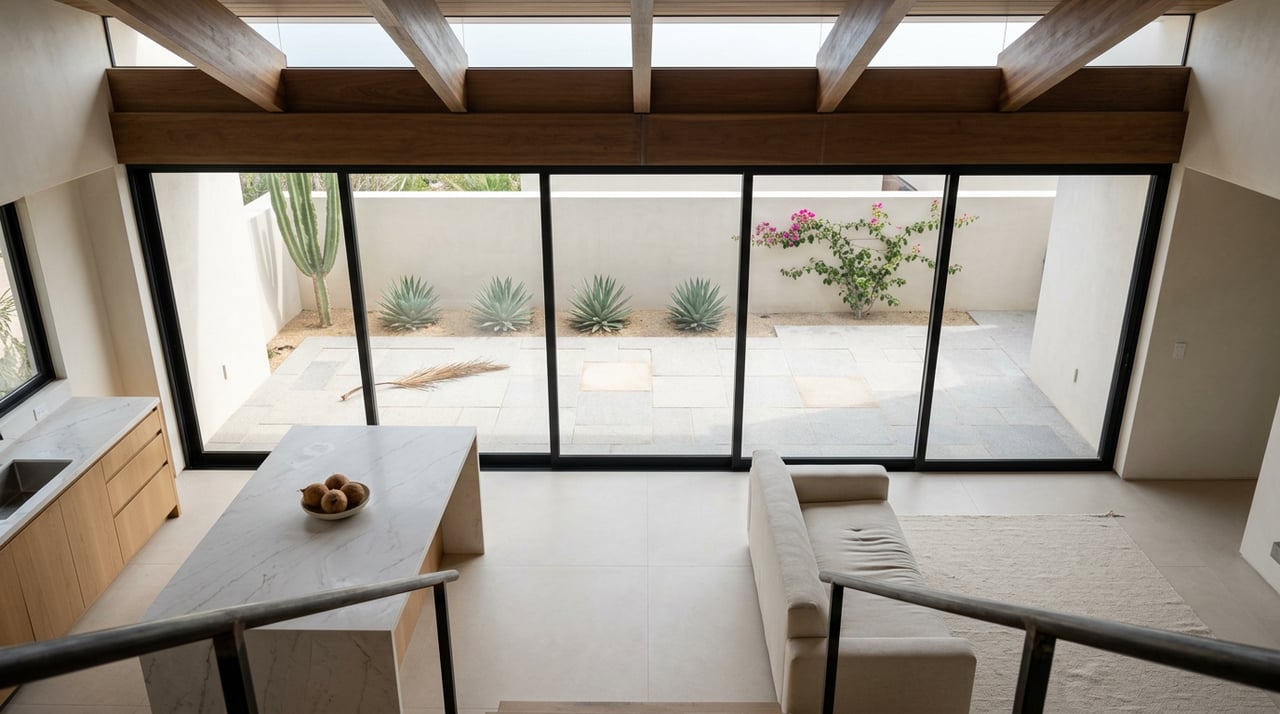
A seller in Copala once told me the surprise wasn't the offer, it was the phone call three weeks later. Escrow needed written confirmation that the golf and beach club membership tied to the home would transfer to the buyer, and needed it before funds would move. Nothing on the HOA statements he'd received for years mentioned a transfer step. Nothing on the listing sheet flagged it either. It sat quietly in Quivira's membership rules, the kind of detail that only surfaces once a deal is already moving.
That's the pattern worth understanding before you list anything in Quivira. The community reads as one address on a map, but it is built from at least five distinct developments, Mavila, Copala, Alvar, Cielo Marbella, and the St. Regis Residences, each carrying its own HOA schedule, its own membership terms for golf and beach club access, and its own resale friction. The phase you're in changes what leaves your wire at closing more than the list price does.
The Phase Decides More Than the View
Quivira sits on roughly 1,850 acres of Pacific coastline in Cabo San Lucas, anchored by a Jack Nicklaus Signature golf course that opened in 2014 and earned Golf Magazine's Best New International Golf Course honor the same year. That much is consistent across the whole community. What isn't consistent is how each phase handles the two things that actually matter to a seller: monthly carrying cost and what happens to club access when the property changes hands.
Mavila is the entry tier, with condos priced from roughly $329,000 to $1,000,000. Copala, sold out as a development and now trading almost entirely on resale, carries HOA fees starting around $450 a month. Cielo Marbella runs closer to $600 a month, and its owners get golf access at a 25 percent discount off the standard resort rate with no initiation fee, plus a separate beach club membership bundled in. The St. Regis Residences sit at the ultra-luxury end, tied to a hospitality brand and a culinary program from a Michelin-recognized chef, with a second private Nicklaus course reportedly in development for the community.
Here's the comparison that most sellers never see laid out side by side:
| Phase | Typical Entry Price | Monthly HOA (approx.) | Golf/Beach Access |
|---|---|---|---|
| Mavila | $329,000–$1,000,000 | Varies by unit | Included via Quivira membership, verify per unit |
| Copala | Resale only, sold out as new development | ~$450/month | Discounted annual golf fee, beach club separate |
| Cielo Marbella | Varies | ~$600/month | 25% golf discount, no initiation fee, beach club included |
| St. Regis Residences | Ultra-luxury tier | Not publicly standardized | Branded hospitality access, second course in development |
Notice that "included" and "discounted" aren't the same promise. A buyer comparing two Quivira listings on price per square foot alone has no way of knowing that one comes with beach club access built in and the other requires a separate annual fee. That gap becomes your problem at negotiation, not the buyer's.
The Transfer Fee Nobody Puts on a Flyer
Here's the detail that actually complicates a Quivira sale. Membership transfer fees apply when a property changes hands, and they sit outside the HOA fee schedule entirely. They're not itemized on the resale listing, not mentioned in most marketing materials, and not something a seller typically thinks to disclose because the fee usually doesn't come up until the buyer's side asks for it during due diligence.
Confirm the membership transfer terms in writing before you sign a listing agreement, not after you accept an offer. A verbal assurance from years ago about "transferable" access is not the same as a current letter from the administrator.
This matters because buyers evaluating Quivira resale inventory are increasingly told to verify unit-specific HOA obligations and membership transfer fees before making an offer at all. If your paperwork isn't ready when that request lands, you're negotiating from a weaker position at the exact moment leverage matters most.
What Actually Leaves Your Wire at Closing
Price aside, a Quivira seller is carrying a specific stack of costs that don't show up until the closing statement is drafted:
- Capital gains tax (ISR), the largest single cost for most foreign sellers, calculated on the gain from original purchase to sale
- Fideicomiso trust cancellation fee, typically in the range of $1,000 to $1,500 USD, owed to the bank trustee when the trust closes out
- HOA clearance letter and proof of paid dues, required from the property administrator before a sale can close, with any unpaid balance or prorated quarterly fee settled first
- Current-year property tax proration, split between buyer and seller based on the closing date
- Legal advisory fees, often $500 to $2,000 USD, if you engage a private attorney to review title, fideicomiso terms, or tax exposure, which is common on higher-value luxury transactions
None of these are unique to Quivira in isolation. What's specific to Quivira is that the membership question sits on top of this stack, and it's the one item most sellers have never been asked about before.
The Peso Detail That Complicates the Bigger Number
Here's a wrinkle that catches even experienced sellers off guard. Quivira listings are priced and marketed in US dollars, but Mexican capital gains liability is calculated in pesos, using the exchange rate on the actual date of closing. Your gain isn't fixed the moment you accept an offer. If the peso moves meaningfully between contract signing and closing, and escrow periods here can run weeks to months, the tax bill calculated at the end can differ from the estimate your advisor ran at the start, even though the dollar sale price never changed.
This is a detail worth having a conversation with your accountant or notary about early, not something to leave until the deed is being drafted.
Where the State's New Tax Fits In
Baja California Sur applied its 3 percent ISABI acquisition tax statewide as of January 1, 2026. This tax is typically a buyer-side cost, part of the 5 to 8.5 percent of purchase price that buyers now budget for closing across the state. Why does that matter to a seller? Because buyers walking into Quivira today are pricing in a heavier closing bill than buyers did even a year ago. A seller who can hand over clean HOA documentation, confirmed membership transfer terms, and an up-to-date fideicomiso statement the moment due diligence starts removes friction the buyer is already braced for elsewhere in the transaction. That preparation becomes a quiet form of leverage in a market where, as of the first quarter of 2026, Los Cabos saw roughly $391 million in sales go under contract, a meaningful rebound from the prior quarter, with condos leading that recovery.
Before You List
A short sequence, ideally started two to three months before your property goes to market:
- Request written confirmation of your phase's HOA structure and current membership transfer fee from the community administrator
- Obtain the HOA clearance letter and resolve any outstanding dues or prorated balances
- Confirm your fideicomiso trustee fees are current and ask your bank what the cancellation fee will be at closing
- Have a notary or accountant run a capital gains estimate in pesos, not just dollars, so you understand your exposure to exchange rate movement during escrow
- If your sale involves complex title history or a higher price point, engage a private attorney early rather than after an offer is already in hand
FAQ
Does every phase in Quivira charge the same membership transfer fee? No. Terms vary by phase and sometimes by individual unit history. Confirm the specific figure with the community administrator rather than assuming it matches what a neighboring property paid.
Who typically pays the new statewide acquisition tax? The ISABI tax is generally a buyer-side closing cost in Baja California Sur, but it shapes what buyers expect the total transaction to cost, which affects negotiations on price and terms.
Is the capital gains calculation the same for every seller? No. It depends on your original purchase documentation, allowable improvement costs, and the exchange rate on the date of closing. This is worth a direct conversation with a qualified accountant or notary rather than a general estimate.
Selling in Quivira rewards preparation more than it punishes price. The phase you own, the paperwork behind your membership, and the timing of your closing all move the number that actually reaches your account. If you're weighing a sale and want a clear-eyed look at what your specific property carries, Jorge Gómez can walk through the phase-specific details with you before you ever put a sign in the ground.


