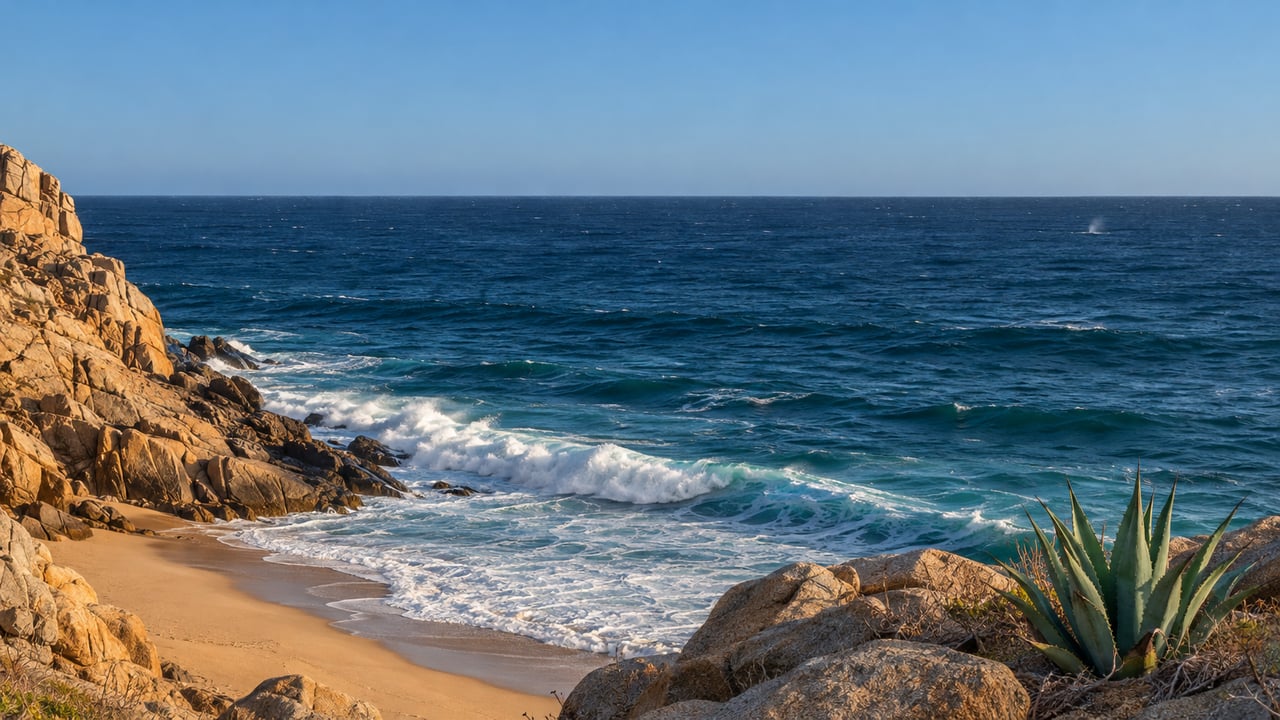
"Excesiva navegación." Those two words, meaning excessive boat traffic, sit in the middle of the federal notice that sets this winter's whale-watching season. They explain why the stretch of water most familiar to anyone living above the marina is one of the places where tour boats may not watch whales at all.
SEMARNAT, Mexico's environment ministry, published its 2026–2027 whale-watching notice in the Diario Oficial de la Federación on October 30, 2026. For the Cabo San Lucas Flora and Fauna Protected Area, it carves out two restricted zones. The first covers the port enclosure plus a 2-kilometer zone around the Arch. The second is a 1-kilometer strip running out to sea from Punta Ballenas. So for Pedregal, the season starts on land. Licensed boats head away from Land's End, and the people with a clear view of the Pacific from Solmar and the hillside can see the season from shore before the tours start and while they run.
December 15 Is When the Boats Can Start
The notice sets the Cabo San Lucas season, along with San José del Cabo, at December 15, 2026 through April 30, 2027. Those are the same dates as last season, which ran from December 15, 2025 to April 30, 2026. Tribuna de México reported the staggered openings across Baja California Sur on November 6.
The season dates set when permitted boats may run tours, and whales can arrive earlier. Last year, The Cabo Sun reported whales along the corridor between San José del Cabo and Cabo San Lucas around mid-October 2025, about two months before the first legal tour. The Cabo San Lucas Beaches whale guide says November and late April can bring the first or last whales of the year, but sightings in those months aren't reliable. January through March usually brings the biggest numbers. The Los Cabos Tourism Board's marine wildlife calendar, dated October 21, 2026, agrees. It lists December through April as the local season and January through March as the best odds.
As of Thursday, November 19, the boats are less than four weeks from going out. Any early whale seen between now and mid-December will be seen from shore.
Why Tour Boats Skip the Water Near the Arch
Here is the passage on Cabo San Lucas from the federal notice, quoted in full:
"Área de Protección de Flora y Fauna Cabo San Lucas (APFF Cabo San Lucas) (con dos zonas restringidas debido a la excesiva navegación: 1. Parte norte del polígono del APFF Cabo San Lucas, en el Recinto Portuario e incluye una zona de 2 kilómetros (km) alrededor del Arco de Cabo San Lucas; 2. Límite este del polígono del APFF Cabo San Lucas en una franja de 1 km de distancia (desde Punta Ballenas hacia mar adentro)..."
In plain terms, the port and the water around the Arch carry too much boat traffic to also host whale watching, so the notice closes both to it. In winter, the whale boats pass through that water on their way out and don't stop there to watch.
Marina operators describe their trips that way. Whale Watch Cabo says its trips leave Cabo San Lucas Marina, pass the Land's End landmarks, then search down the Pacific coast or the Sea of Cortez side, depending on where whales were last reported. Its private tours run about two and a half hours.
This year's notice also adds a new Baja California Sur area, El Sargento and La Ventana, on the same December 15 to April 30 schedule. For Cabo San Lucas, the dates and the two restricted zones are the same.
Watching From Solmar and the Hill
The Cabo San Lucas Beaches guide, updated in October 2026, names Solmar Beach and Pedregal as Pacific-side places to watch whales from shore, with humpbacks passing offshore from January to March. It also warns not to go in the water, because the Pacific surf there is dangerous. The same guide recommends watching from a high point, early in the morning when the sea is flat, and looking for the spout first.
That advice suits Pedregal's terraces and its daily climb. The Cerro de la Z walk already gets people up high at the times of day the guide recommends.
Some background on what you're looking at:
- Humpbacks are the main whales in Los Cabos. They come south from North Pacific feeding grounds to breed and calve in warm water. These are the whales that breach, slap their fins and lift their tails.
- Gray whales calve far to the north, in the Ojo de Liebre and San Ignacio lagoons in Mulegé, and only occasionally show up off Los Cabos.
- Blue, fin, minke and sperm whales visit the Sea of Cortez in winter and spring, mostly far offshore. Orcas are rare.
Whale-Watching Boats
From the hillside, you'll often see the boats before the whale. The federal standard, NOM-131-SEMARNAT-2010, governs how close they can get and for how long. Each annual notice refers back to it.
When You Want a Closer Look
The Los Cabos Tourism Board lists Cabo Adventures, Cabo Expeditions and Rancho Tours among the area's whale-watching tour providers. Because the federal standard requires authorization, ask any operator about its current SEMARNAT permit before you book.
Proyecto Cetáceo takes a more educational approach. Luisa Ferreira and Cecilia Ruiz founded it to combine responsible whale tourism with cetacean science, conservation and local education, especially for young people. The tourism board's profile says its trips leave from the marina, can go into open water, and last three to six hours. The group describes its tours this way:
- Naturalist guides, whale-learning materials and a hydrophone on board, so you can hear the whales as well as see them
- A sunrise whale-watching trip of about three hours
- 5% of the stated contribution going to whale disentanglement and 15% to marine education for local children
- A growing photo and sighting record used to identify individual whales and follow their routes
If You See a Whale Tangled in Fishing Gear
A clear view of the Pacific comes with an occasional responsibility. RABEN, Mexico's large-whale entanglement response network, was created through ECOBAC with support from CONANP, the national protected-areas commission. It trains responders, collects data, works on prevention and informs the public. It has a Los Cabos coordinator within CONANP. Nationally, the network says it had freed more than 100 whales by the 2025 season.
RABEN's entanglement response protocol is clear: only authorized responders may free a whale. Members of the public should report the animal through the authorities or RABEN. Tour boat operators can help pass along the report and find the whale again. So if you see a whale dragging line from Solmar or a terrace, note the time and where it's heading and report it. Don't paddle out. Last October, The Cabo Sun reported that several agencies worked together to return a stranded calf to the sea near the Paradisus and Hilton area on the corridor.
From now until December 15, any whales off Land's End will be seen only from shore, and through April the water around the Arch stays closed to whale watching.
If you'd like to know which Pedregal terraces and lots have open Pacific views for watching the season, Jorge Gómez can walk you through the hillside. Let's Connect.